Injuries are part of the sport. Here I share four personal experiences with running injuries and what they have taught me about adjusting, testing and paying closer attention along the way.
The images in this article are hidden because some of them may be uncomfortable to look at. You should be able to choose whether to open them or not.
After many years of training, I have had my share of injuries too. Not one big, dramatic story, but several different experiences, each with their own problems, solutions and frustrations. Injuries need to be part of the equation, whether we are trying to prevent them or find a way to manage them.
Here I share three injuries I have had myself, plus a small “bonus injury”. What has helped me is not necessarily what will help you. My experiences are personal, not a manual. But perhaps they can give you something to recognise, test in training or take into a conversation with a professional.
Shin splints
About a month before I was due to race an Ironman, I developed shin splints. I use the term because it is what most people recognise, even though it can cover different problems.
In my case, it came after too much training volume over too short a period. It built up over a longer time. My muscles felt ready for the load, but unfortunately that turned out not to be quite enough. It did not take much before the pain took hold.
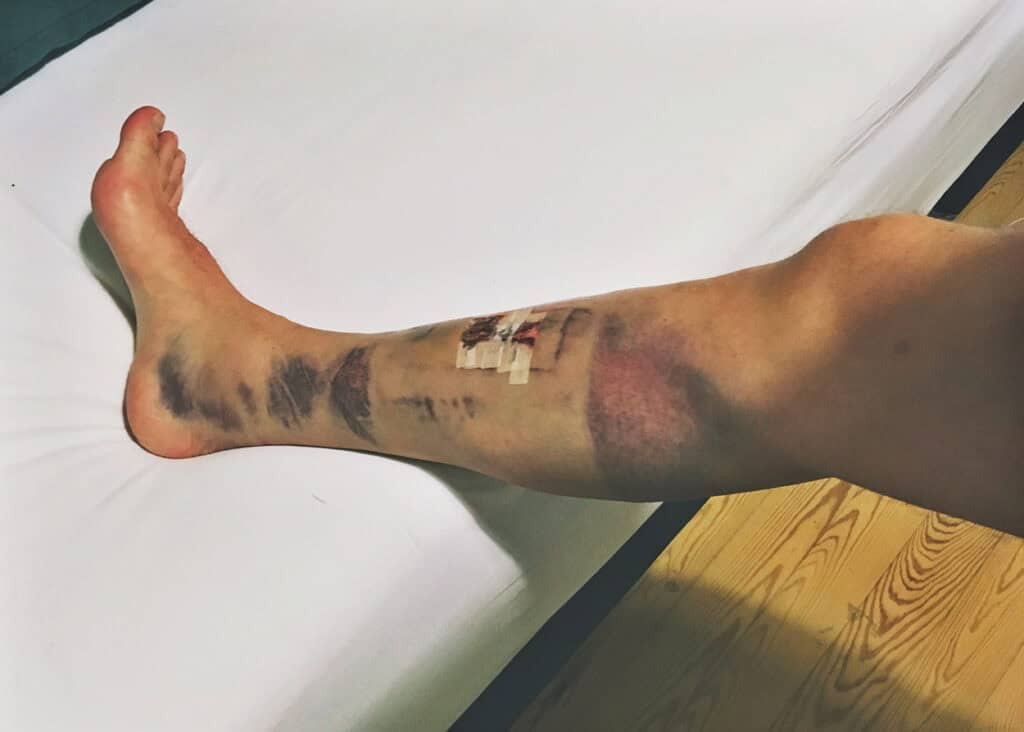
If you have had shin splints yourself, you know how difficult they can be to run with. They can hurt a lot, and just when you think they are gone, they can flare up again.
I tried many things. Massage, changes to my running form, strength exercises and much more. Eventually, I chose to have surgery. It helped, but did not remove the problem entirely. These days, it is mostly about keeping it under control and using the things I know help me.
I regularly use a massage gun on the sore areas around my shins. I do calf raises and tibialis raises in different variations, use kinesiology tape on longer runs and keep my shins warm in the cold with compression sleeves. None of these things has been the one magic solution. The combination is what works for me.
There is plenty of advice online about how to prevent or get rid of shin splints. I have not yet found one single approach that solves everything. Some things have had an effect. Together, they make it possible for me to keep the problem under control.
Blisters
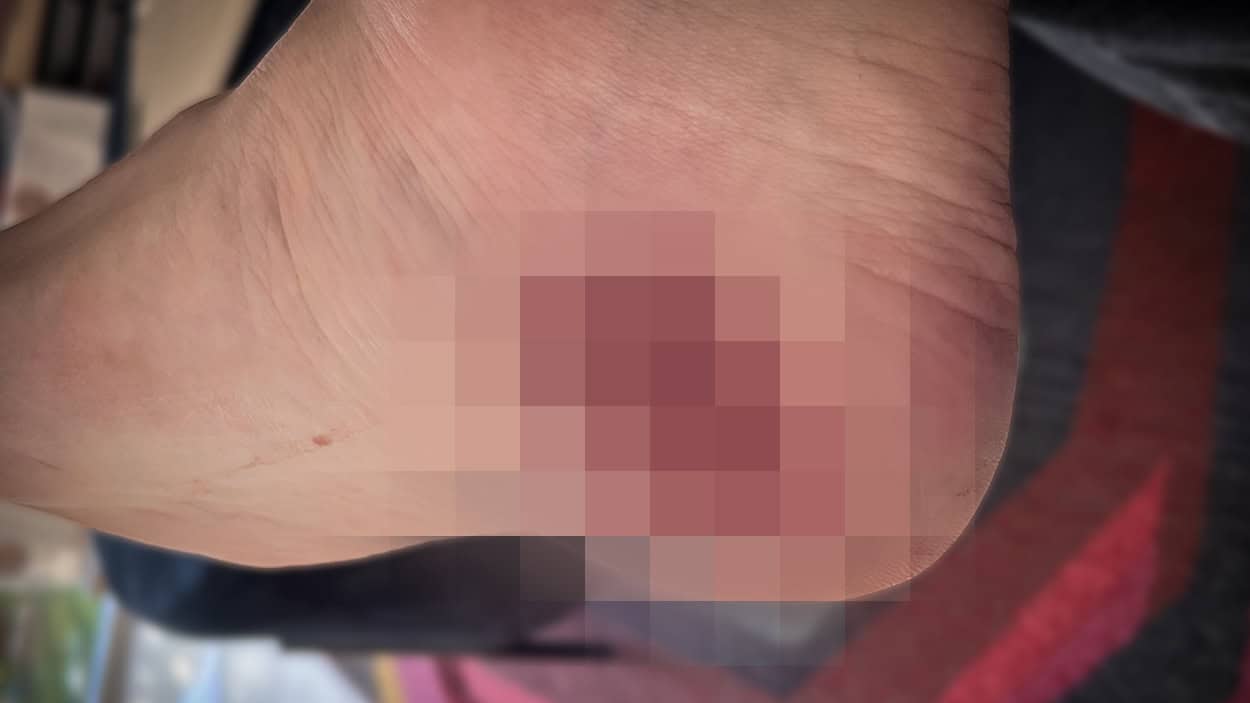
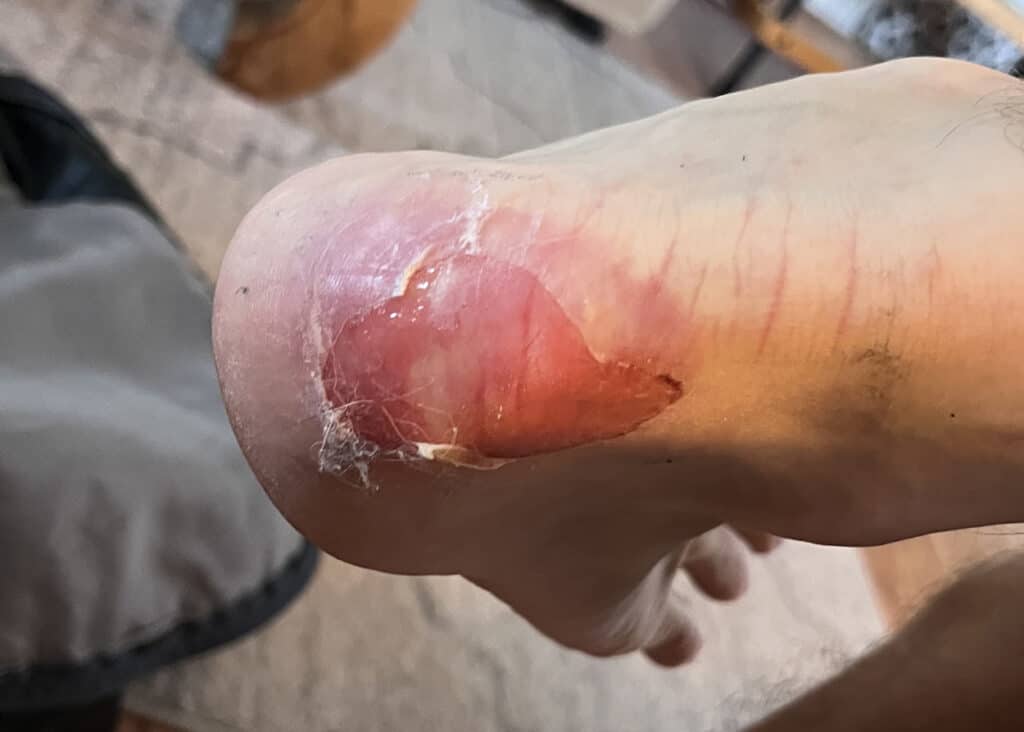
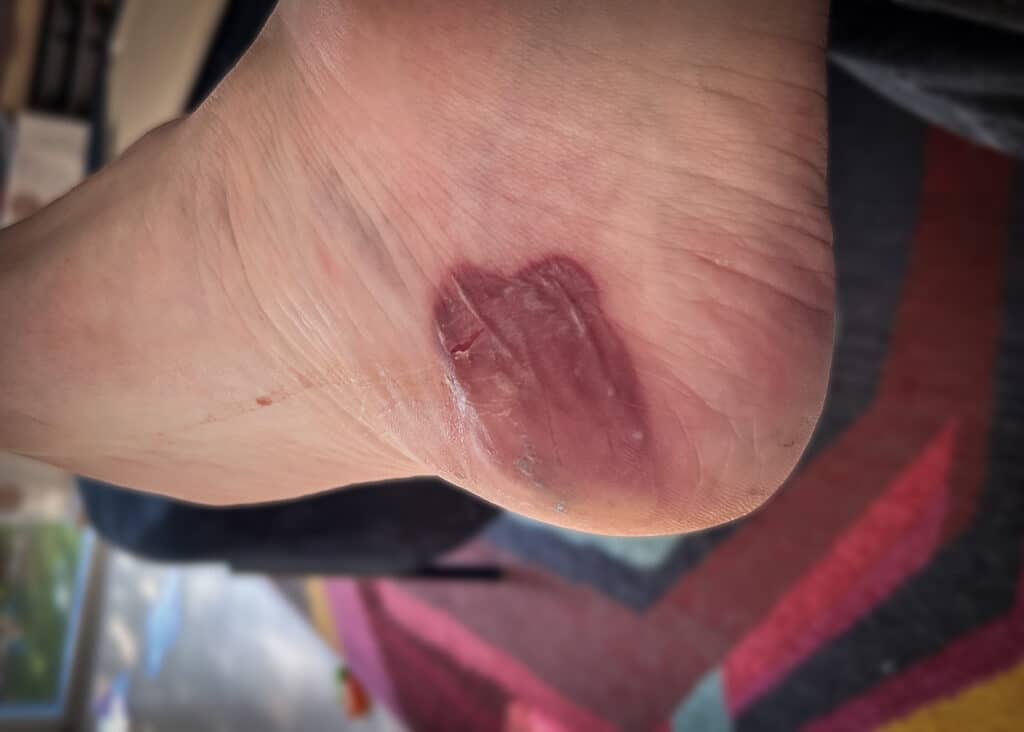
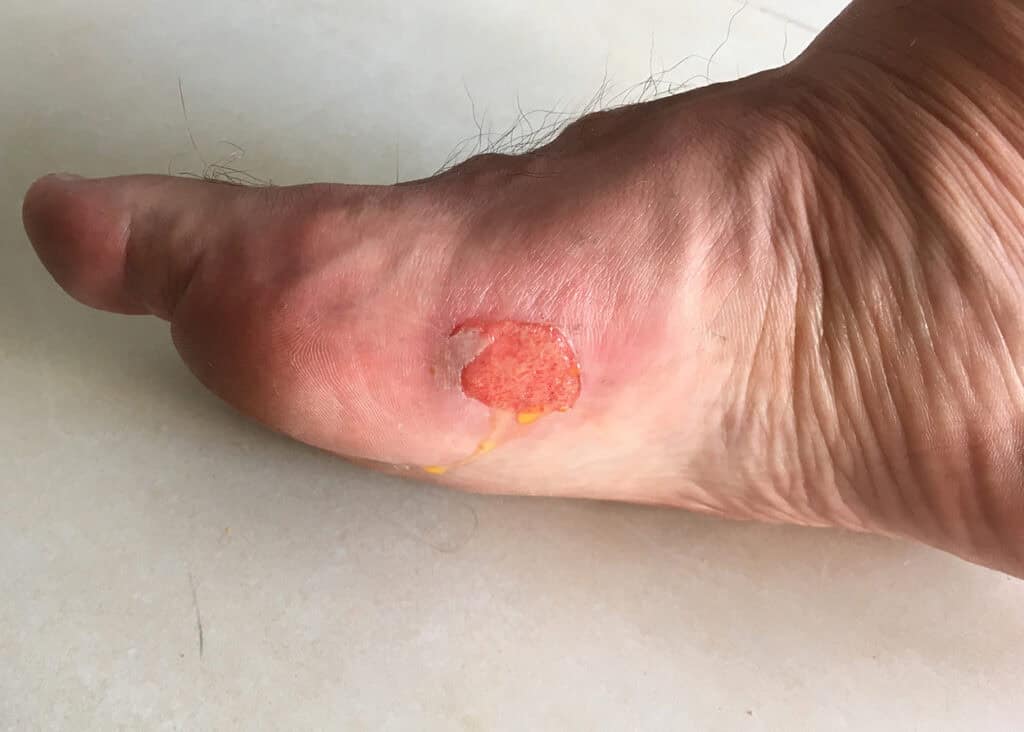
For some genetic reason, I get blisters just from looking at new running shoes online. After many years of CrossFit, I have also had problems with blisters and calluses on my hands. By now, I have accepted that my skin does not become particularly resilient through experience alone.
The list of painful blisters is long, and I only have photos of a few. I could easily write a whole article about blisters, foot care and all the things I have tried. Here is the short version.
Blisters can hurt enough to make a runner drop out. On shorter runs, I use a good amount of foot Vaseline on the places where I often get blisters before putting on socks and shoes. For me, that often holds up for around 10 to 15 km.
On runs up to around 25 km, I use different kinds of tape, including kinesiology tape, pre wrap and strapping tape. I apply it in particular ways that I have only worked out after a lot of trial and error. On longer runs, I use tape together with Armaskin liner socks. It has been the best individual purchase I have made for preventing blisters. I also use socks with a grip sole.
Foot care for long runs is its own category, and there are probably as many rituals as there are runners. The most important thing for me has been to test things in training. A race is a pretty bad place to discover that a particular taping setup or a new pair of socks does not work.
Ankles
About two months before a 100 km race in mid February, I rolled my ankle. Not a small wobble, but a really bad one.
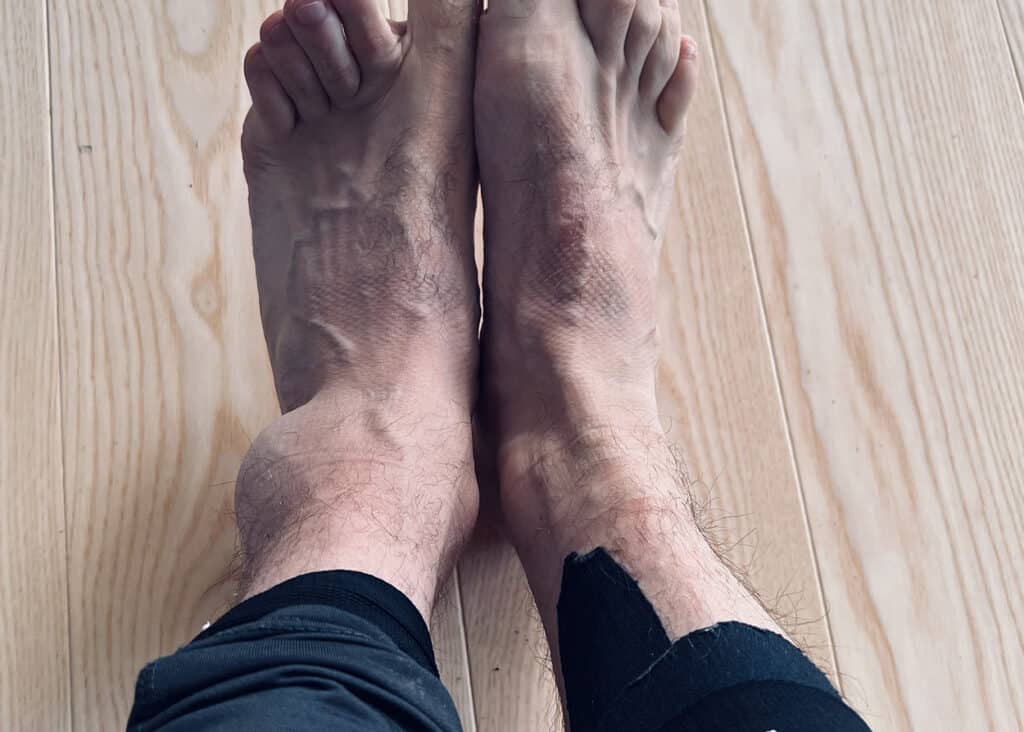
Rolling an ankle is a real part of trail running, and ankle stability has therefore been an important part of my preparation. For large parts of my training since then, my ankle has often been the factor that set the limit for my training volume and intensity.
I have tried several products to stabilise my ankle. What they had in common was that they were either uncomfortable or rubbed against my skin. What has worked best for me is wide sports tape. I tape my ankle so it can still move naturally, but gets resistance against the movements I want to limit.
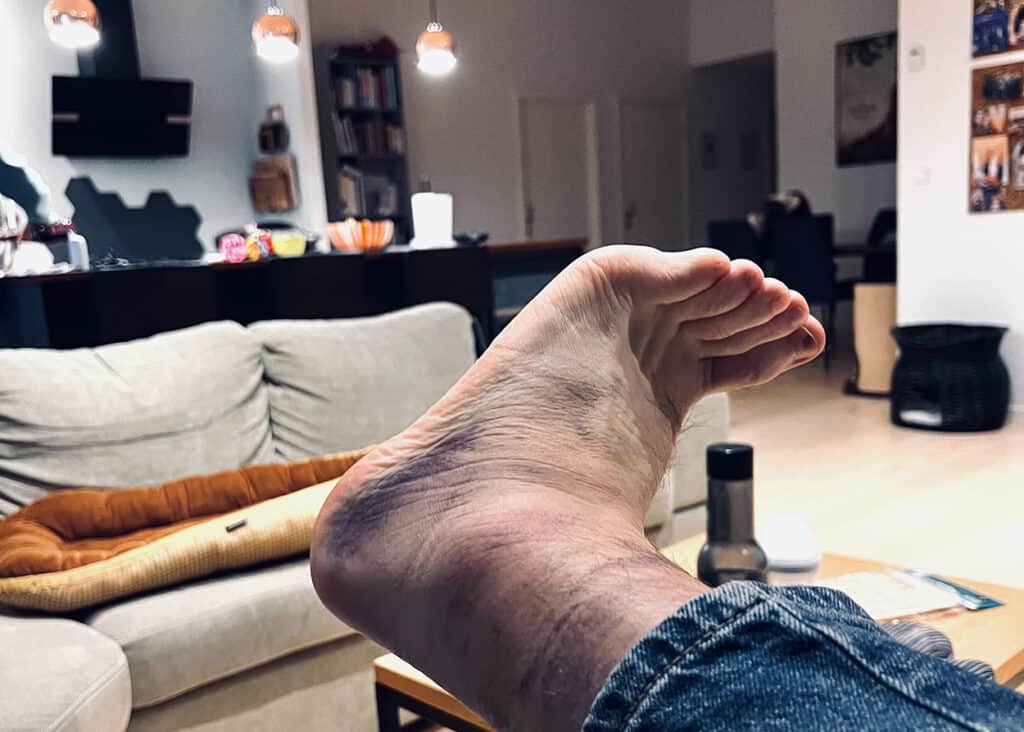
I also run with insoles, which make my foot and ankle feel more stable. Before trail runs in particular, I warm up my ankles with a short routine of exercises and stretches. It is not spectacular, but it has become a regular part of my preparation.
Nettle stings
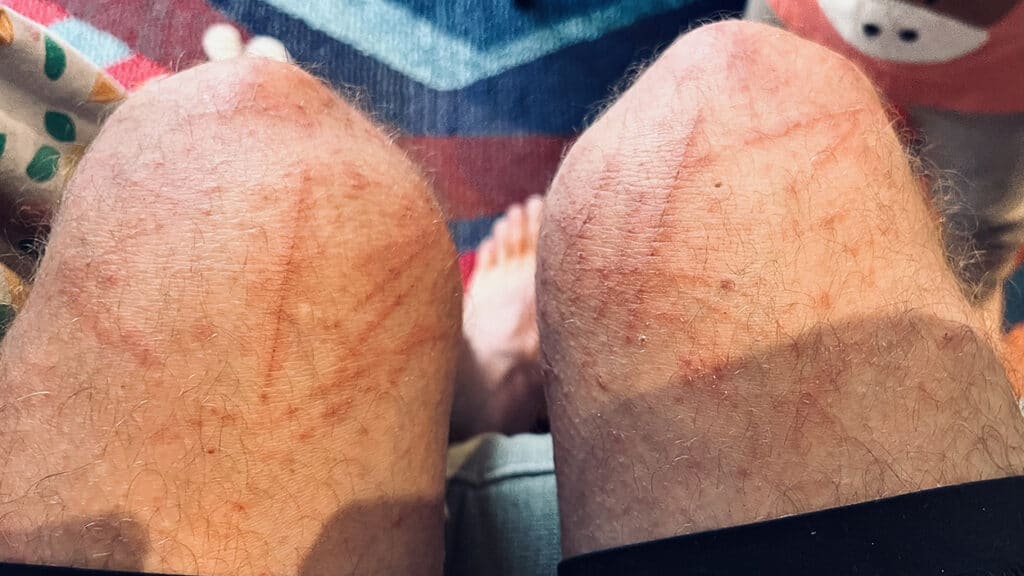
As a “bonus injury”, I want to highlight nettle stings. During a race in North Zealand, I suddenly found myself in a huge patch of nettles in the middle of the night. It was a little silly, but the combination of fatigue and poor lighting meant that I did not look where I was going properly before it was too late. It hurt a little at the time, but fortunately it passed quickly. Right until the race was over and I was lying in bed at home trying to sleep. That did not work, so I had to take a shower, pour vinegar over my legs and then go to the sofa and lie down with my legs outstretched and my feet on the coffee table, so my shins were hanging in the air without touching anything.
Fortunately, the pain faded the next day and everything was fine. But the point is that injuries, to a greater or lesser extent, will happen no matter how well prepared you think you are. That is why it is important to train your mindset to deal with these setbacks, which will inevitably happen both in training and in races.
There are different ways to train that part, but that is material for another article at a later point.